




Could a completely original paper still be flagged as “likely machine-generated”?
Yes — and that’s exactly why many students, educators, and professionals are confused.
With AI writing tools, detection models, and institutional policies evolving rapidly, the real question isn’t just whether Turnitin can detect ChatGPT in 2025, but how detection works, where it fails, and how to stay on the right side of academic and professional standards.
This guide offers a clear, balanced explanation. You’ll learn how AI indicators operate, what reviewers should (and shouldn’t) rely on, and how to write with integrity while using modern tools responsibly.
The Short Answer: Can Turnitin Detect ChatGPT?
Turnitin provides an AI writing indicator that estimates the likelihood that parts of a submission were produced using large language models.
This indicator is:
- Probability-based, not definitive
- Not proof of misconduct
- Designed to support human review, not replace it
Institutions decide how the indicator is used. Most recommend treating it as a starting point for discussion, supported by additional evidence.
Key references:
- Turnitin AI Writing Overview
- Turnitin Instructor Guidance
- OpenAI’s public statements on AI detection limitations
Bottom line: Turnitin can sometimes identify patterns associated with AI-generated text, but no detector is perfectly reliable in 2025.
Why Human-Written Text Can Be Flagged
One of the most misunderstood aspects of AI detection is that simple, clear human writing can resemble machine output.
Text that is:
- Highly structured
- Neutral in tone
- Free of stylistic variation
- Focused on summarization
may statistically resemble AI-generated content — even when written entirely by a person.
This is why detection results must always be interpreted with context rather than fear.
How AI Detection Works (Plain English)
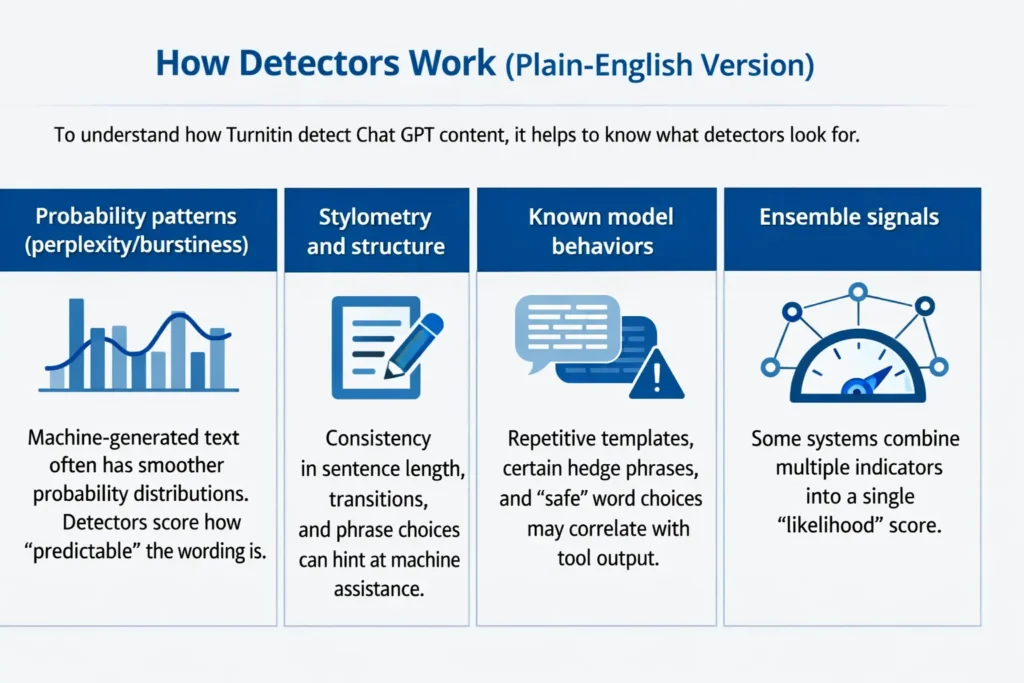
AI detectors do not identify specific tools like ChatGPT by name. Instead, they analyze writing patterns.
Common signals include:
- Predictability of word choice
- Uniform sentence length
- Consistent phrasing patterns
- Low stylistic variation
Some systems combine multiple signals into a single likelihood score.
What detectors do not do:
- They do not read drafts or screen activity
- They do not identify the exact tool used
- They do not prove intent or misconduct
Detection is statistical, not forensic.
What Detection Gets Right — and Where It Fails
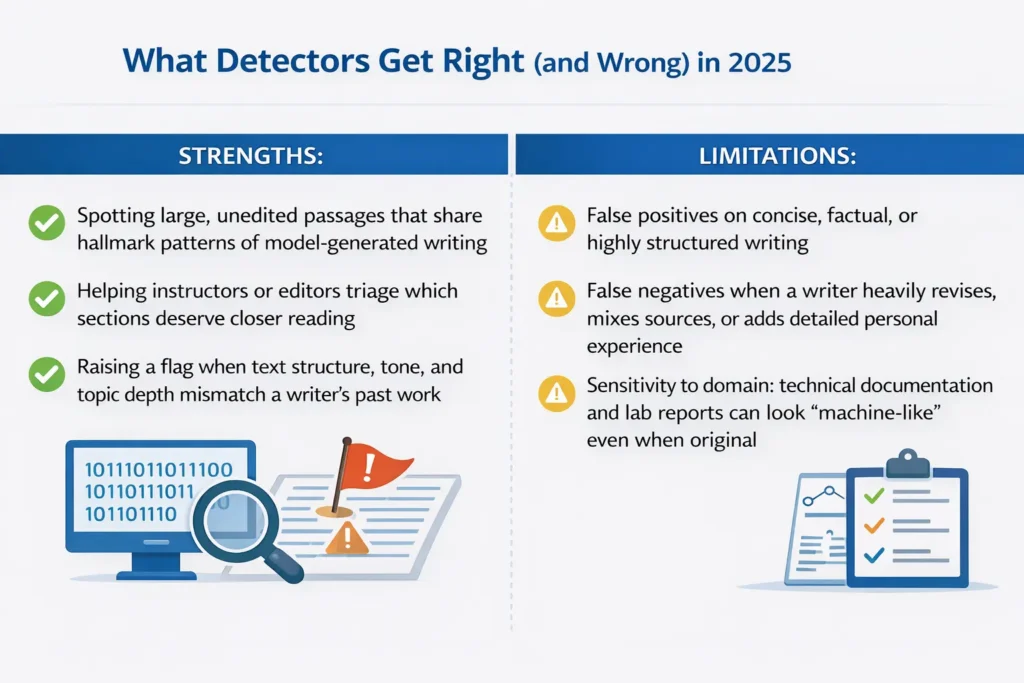
Strengths
- Flagging large, unedited AI-generated passages
- Highlighting sections that merit closer review
- Identifying text that differs sharply from a writer’s past work
Limitations
- False positives in technical or academic writing
- False negatives after heavy human revision
- Sensitivity to domain (reports, summaries, and lab writing often look “machine-like”)
An AI indicator is best viewed as a flashlight, not a verdict.nitin estimates the likelihood some text was machine‑assisted.” Estimations aren’t verdicts.
Policy Reality in 2025
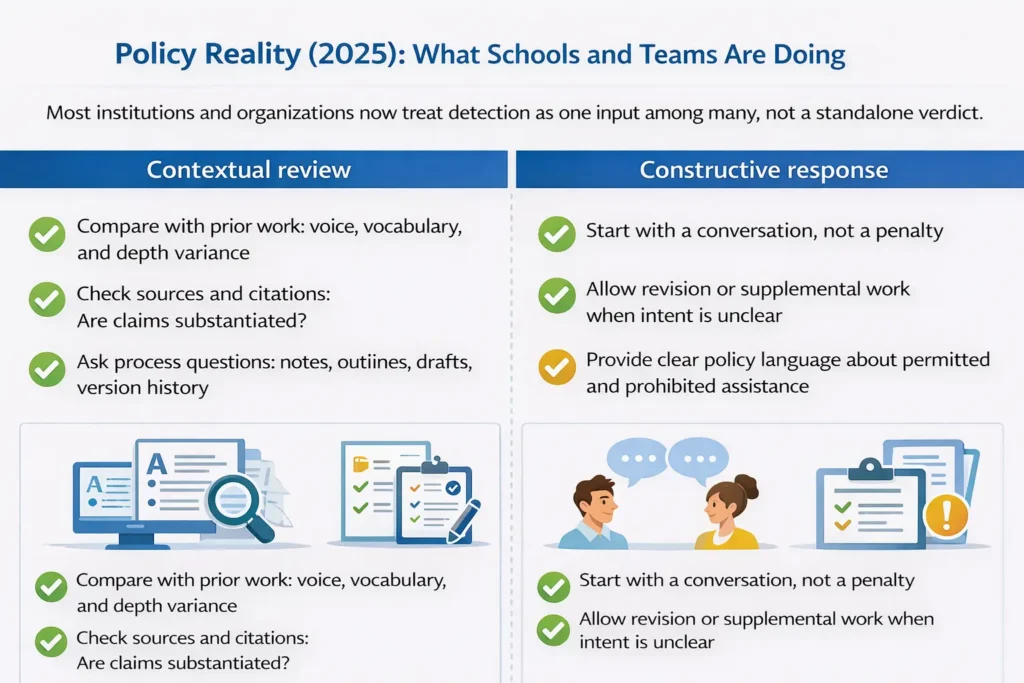
Most schools and organizations now follow a context-based approach:
Responsible review includes:
- Comparing with previous writing samples
- Reviewing citations and source quality
- Asking for drafts, notes, or outlines
- Discussing process before making judgments
A detector score alone is rarely sufficient for action.
Ethical Use of AI: A Practical Framework
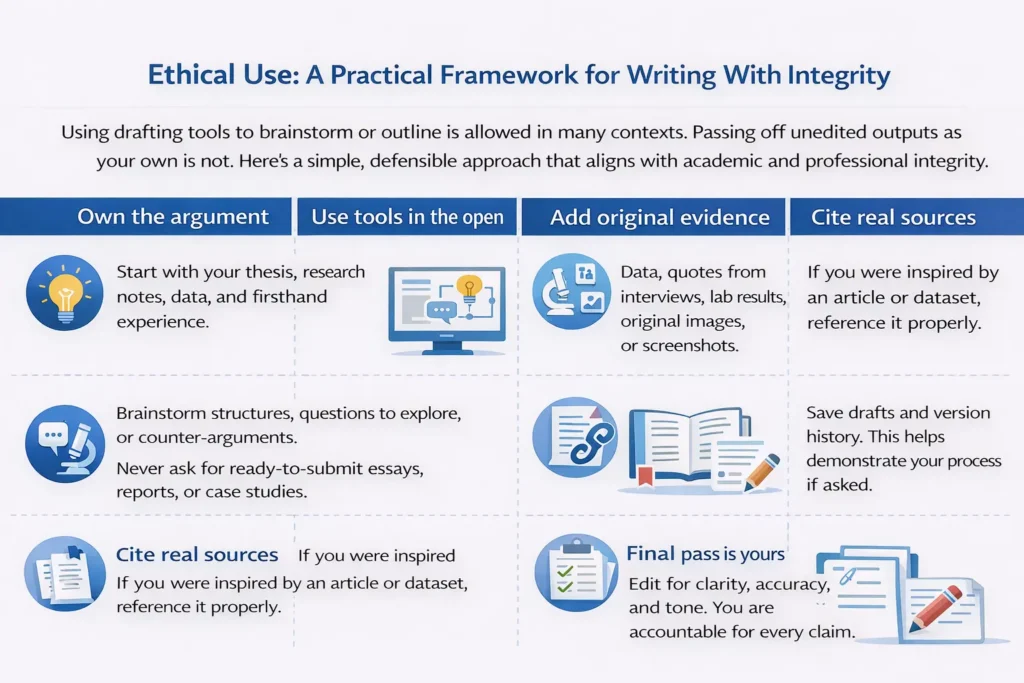
Using AI tools is not inherently unethical. Misrepresenting output as original work is.
A defensible approach:
- Start with your own ideas and research
- Use tools for brainstorming or structure only
- Add original evidence, data, or experience
- Cite sources properly
- Keep drafts and version history
- Take responsibility for every claim
This approach remains valid regardless of how detection tools evolve.avoid missteps regardless of how well Turnitin detect Chat GPT this year or next.
Common Myths About AI Detection
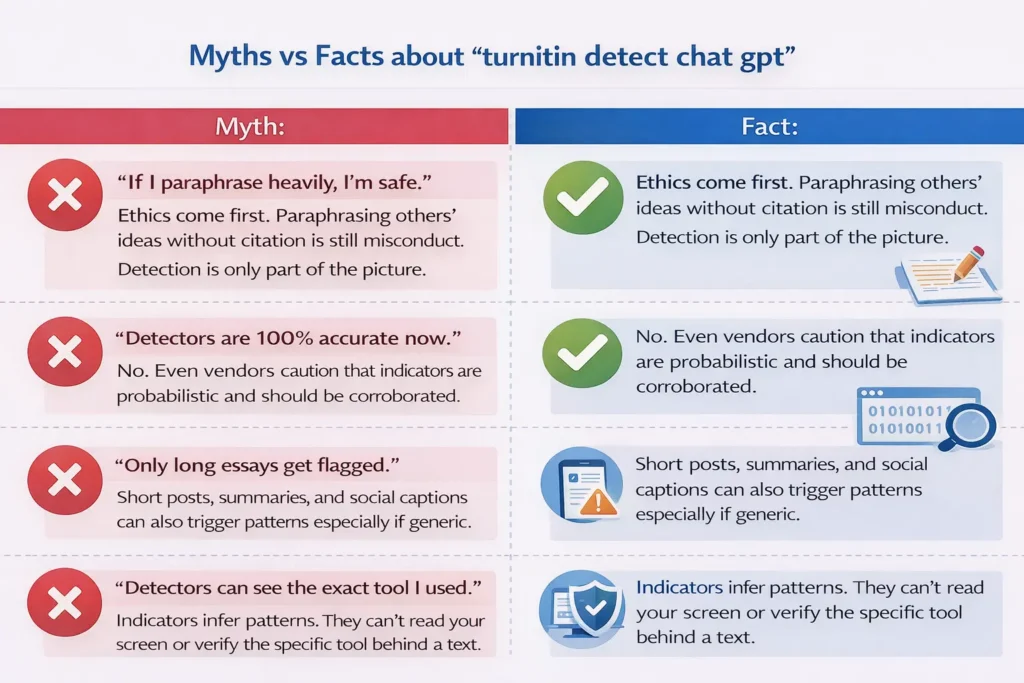
Myth: Detection tools are 100% accurate
Fact: Vendors explicitly state they are not
Myth: Only long essays are flagged
Fact: Short summaries can also trigger indicators
Myth: Detectors know which AI tool was used
Fact: They infer patterns, not tools
Myth: Paraphrasing removes all risk
Fact: Ethics and citation still matter more than detection
How to Reduce False Flags (Without Gaming the System)
This is about authenticity, not evasion.
- Write with real examples and context
- Use a natural voice and domain-specific detail
- Avoid filler and generic transitions
- Cite sources accurately
- Keep your research process documented
Strong, specific writing holds up under any review.iting.
For Educators and Editors: Interpreting an AI Indicator Responsibly
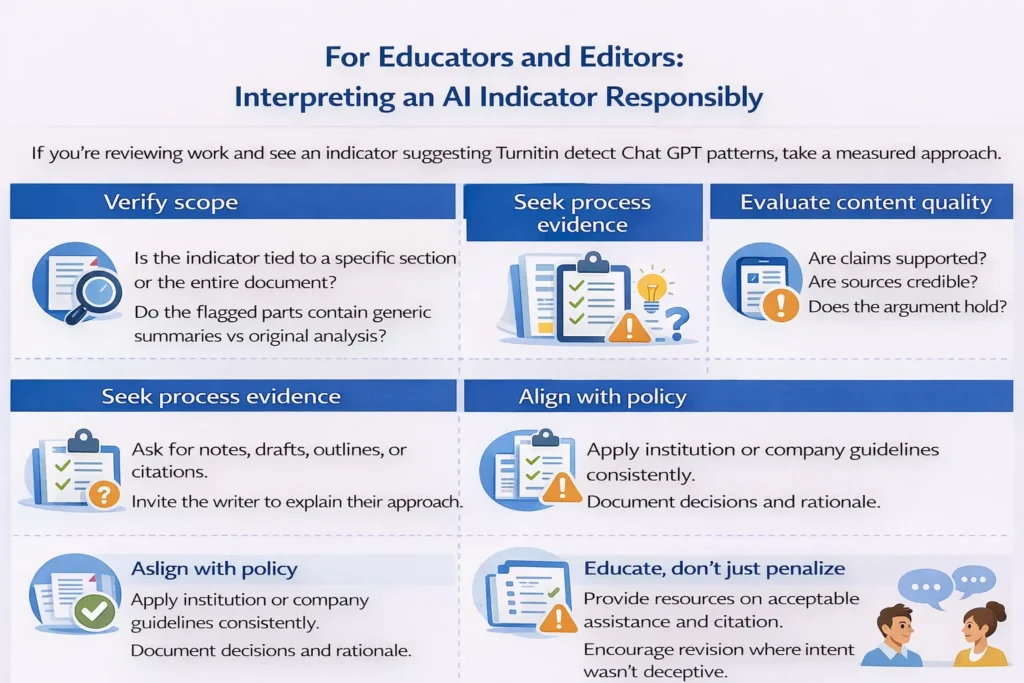
If you’re reviewing work and see an indicator suggesting Turnitin detect Chat GPT patterns, take a measured approach.
- Verify scope
- Is the indicator tied to a specific section or the entire document?
- Do the flagged parts contain generic summaries vs original analysis?
- Seek process evidence
- Ask for notes, drafts, outlines, or citations.
- Invite the writer to explain their approach.
- Evaluate content quality
- Are claims supported? Are sources credible? Does the argument hold?
- Align with policy
- Apply institution or company guidelines consistently.
- Document decisions and rationale.
- Educate, don’t just penalize
- Provide resources on acceptable assistance and citation.
- Encourage revision where intent wasn’t deceptive.
This approach builds trust even when Turnitin detect Chat GPT in part of a submission.
For Students and Professionals: If You’re Flagged, What Now?
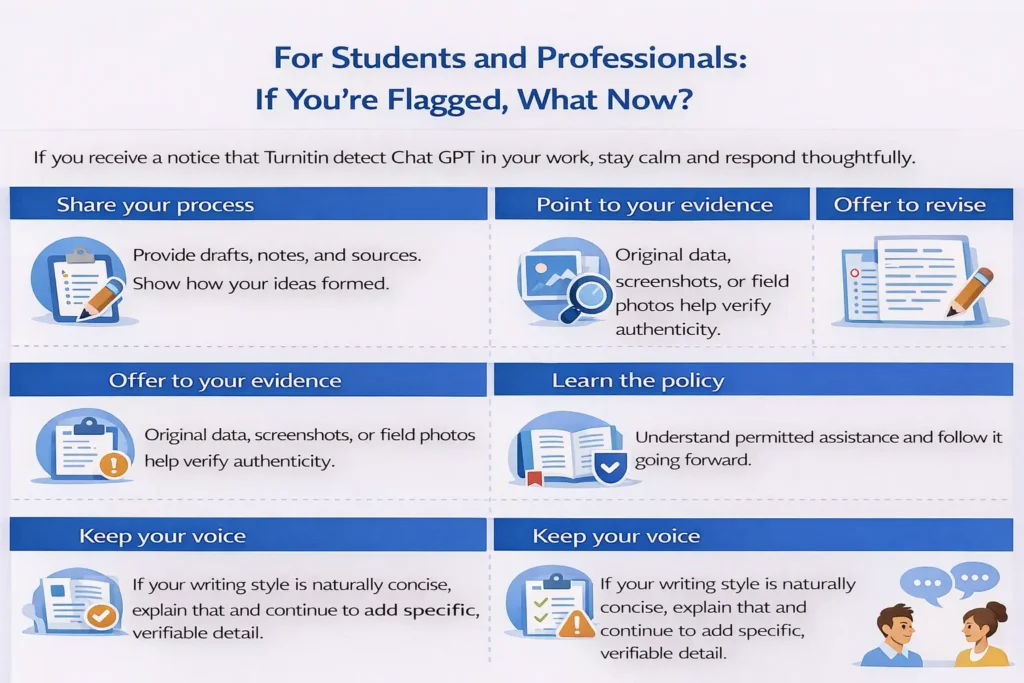
If an AI indicator appears on your work:
- Stay calm
- Share drafts, notes, and sources
- Explain your writing process
- Offer revisions if needed
- Review and follow institutional policy
Transparency matters more than technical arguments.
What Reviewers Trust Most
- Field-specific detail you can explain
- Original data, visuals, or analysis
- Accurate citations with context
- Clear discussion of limitations or trade-offs
These signals are difficult to fake and easy to defend.
AI Detection vs. Plagiarism: Not the Same Thing
- Plagiarism checks compare text to existing sources
- AI indicators estimate stylistic likelihood
You can pass one and trigger the other. They answer different questions.
Business Use Cases: Content That Builds Trust (and Survives Scrutiny)
Brands face similar questions as classrooms: Is the work authentic, accurate, and useful?
- E‑E‑A‑T matters
- Expertise, experience, authoritativeness, and trustworthiness are differentiators especially in 2025.
- Show real proof
- Screenshots, case results, customer quotes, and behind‑the‑scenes process details build credibility.
- Use tools responsibly
- Brainstorm and structure, then bring human research, product knowledge, and editorial standards to the final draft.
Can You Rely on Detectors Alone? No Here’s Why
- Unstable baselines
- Writers vary widely. Cross‑writer comparisons are noisy.
- Evolving models
- Tools and detectors co‑evolve; yesterday’s signal can be today’s noise.
- Context blindness
- An accurate summary can look “machine‑like” but be entirely original.
- Policy and pedagogy
- Detectors inform good pedagogy; they don’t replace it.
Use indicators as flashlights, not hammers.
Practical Checklist: Keep Your Work Beyond Reproach
- Planning
- Draft a thesis and outline in your own words
- Gather primary evidence and credible sources
- Writing
- Write sections from your notes; add specific, firsthand details
- Quote and cite where needed; avoid generic filler
- Review
- Read aloud to check for clarity and voice
- Verify claims and links; remove unsupported statements
- Documentation
- Save drafts and notes; keep a bibliography
- Be ready to walk through your process
Follow this, and you won’t be overly concerned with whether Turnitin detect Chat GPT on a probabilistic basis.
Quick‑Reference Table: What Indicators Can and Can’t Tell You
| Question | What a detector can suggest | What it cannot prove |
| Is this text machine‑like? | A likelihood score based on patterns | Who wrote it, or which tool was used |
| Is the content plagiarized? | No | Only a plagiarism check can compare sources |
| Is the work ethical? | No | Requires policy, context, and intent |
| Should I penalize immediately? | No | Best practice is to corroborate and discuss first |
Final Verdict
Whether or not Turnitin flags a paragraph, the long-term strategy is unchanged:
Do original work. Show your process. Cite responsibly. Write with specificity.
Detection tools will evolve. Policies will change.
Integrity remains the most reliable safeguard for your grades, career, and credibility.
FAQs: turnitin detect chat gpt (2025)
1. Can Turnitin detect ChatGPT with 100% accuracy?
No. Turnitin detect ChatGPT using probability-based indicators, not proof. False positives and negatives exist.
2. Why does Turnitin flag human-written content?
Simple, predictable, or generic writing can resemble AI-generated patterns.
3. Can Turnitin tell which AI tool I used?
No. It cannot identify specific tools like ChatGPT or Gemini.
4. Is AI detection the same as plagiarism detection?
No. AI detection estimates writing patterns, while plagiarism checks compare text against existing sources.
5. What should I do if my work is flagged?
Share drafts, notes, sources, and explain your writing process. Most reviews consider context.